Salle de presse
QC Québec
Tamaracouta : un site emblématique protégé et accessible à la communauté
Une collaboration entre Conservation de la nature Canada et la Municipalité de Mille-Isles permet de préserver près de 300 hectares dans les Laurentides.
20 mai 2026
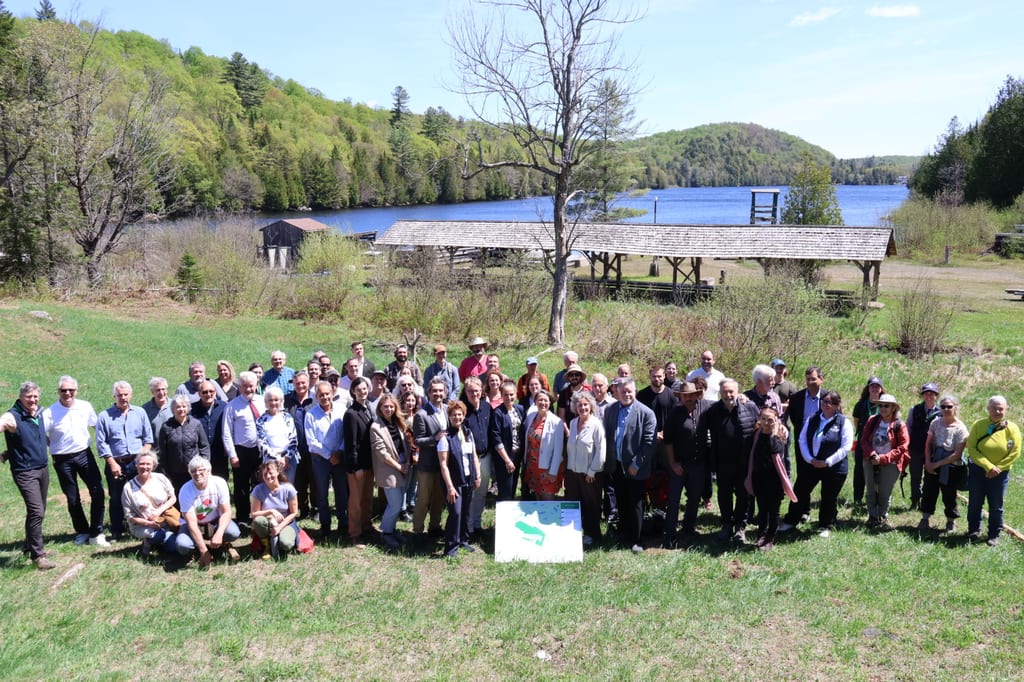
Mille-Isles, QC (May 20, 2026) – Residents of Mille-Isles and the surrounding area will be able to continue enjoying the iconic site of Lac Tamaracouta, now protected for future generations. Thanks to an agreement between the Nature Conservancy of Canada (NCC), the Municipality of Mille-Isles and Éric Desroches, nearly 300 hectares of exceptional natural habitat will be protected, while maintaining access for the community. This project, which combines land acquisition and conservation easements, connects people to nature while protecting the ecological connectivity that is essential to wildlife.
A collaborative approach to conservation
In the face of growing development pressure, conservation in the Lac Tamaracouta area represents a major ecological win for the region. Together, NCC and the Municipality of Mille-Isles have secured adjacent properties to protect their ecological and recreational values.
NCC’s property will be left untouched to allow for the natural regeneration of vegetation. Protecting the site will also help reduce greenhouse gas (GHG) emissions by preventing the conversion of carbon-rich ecosystems into developed areas with lower carbon storage capacity. The municipality will sustainably manage their property and eventually provide public access. On NCC’s conservation easement, located on municipal property, uses will remain controlled to preserve forests and wetlands. This approach reconciles conservation and accessibility.
Next steps: stewardship and access
Over the next few months, partners will work with local stakeholders to create a management plan. It will guide how the property will be stewarded, accessed and how residents can help support conservation. Éco-corridors laurentiens, an organization working to consolidate natural territories in the region, will be a key partner in developing the plan, which will be finalized in spring 2027. Moreover, the Municipality of Milles-Isles will lead the planning of interventions to optimize site management.
Ecological importance of the site
The ecological value of the Lac Tamaracouta site can be found in the diversity of its natural habitats and its location at the heart of a regionally significant ecological connectivity network. Located within a large forest core area, it is home to many tree species, including sugar maple, yellow birch and red oak. Part of the site is made up of old forests that play an important role in supporting biodiversity. Some forest stands are more than 80 years old.
Most of the property is covered by forests and wetlands. Connectivity between these habitats is vital for many species that need to move to find food, mates and shelter. Bird species in a precarious situation in Quebec or at risk in Canada that are particularly sensitive to disconnected habitats, including the eastern wood-pewee and the Canada warbler, have been observed on the property, underscoring the site’s ecological importance.
Participate in local conservation
This project is made possible thanks to the close collaboration between a number of partners committed to protecting natural habitats in the Laurentians. We would like to thank our partners and donors for their support in ensuring the long-term protection of the Lac Tamaracouta site. NCC and the Municipality of Mille-Isles encourage the public to support local conservation and stewardship efforts.
Acknowledgements
We would like to thank Environment and Climate Change Canada for supporting this project through the Nature-Based Climate Solutions Fund and for providing a grant to Nature-Action Québec under the Canada Nature Fund, and the gouvernement du Québec, through its Accélérer la conservation dans le sud du Québec (ACSQ) project. We also thank the Fondation Toboggan & Co, the Fondation Tremblay-Carré, the Fondation Écho and other donors who prefer to remain anonymous for their generous support. We are also grateful to Éric Desroches, as well as for the support of local residents who mobilized around this meaningful project.
Quotes
“Protecting a site of this magnitude is a collective win that demonstrates the strength of our partnerships. We are deeply proud to contribute to safeguarding the natural heritage of this land. Together, we’re not just protecting the landscape; we’re also building a future where nature and communities thrive together.” – Claire Ducharme, Vice-President Quebec, Nature Conservancy of Canada
”Protecting the lac Tamaracouta site is a tremendous source of pride for Mille-Isles. Thanks to this agreement, nearly 300 hectares of exceptional natural environments will be protected, with managed, respectful and safe access for the public. I also wish to acknowledge the remarkable donation of approximately 85 hectares adjacent to the site, generously made by the De Volpi and Groome-Walker families, which strengthens ecological connectivity. Together with Éco-corridors laurentiens, we are now developing a master plan to ensure its sustainable enhancement, in collaboration with our citizens and partners.” – Howard Sauvé, Mayor, Municipality of Mille-Isles
“I would like to thank all the partners who contributed to this project for their commitment to preserving biodiversity in the Laurentians. Protecting nature means investing in the well-being of our communities. These efforts are significant and will bring long-term benefits to the region.” – The Honourable Julie Dabrusin, Minister of the Environment, Climate Change and Nature
“This project demonstrates what we can achieve by working together: protecting exceptional natural spaces, supporting the well-being of communities, and ensuring the sustainability of our natural heritage, all while benefiting biodiversity. In this way, the residents of Mille-Isles and future generations will be able to continue enjoying this iconic site in the region.” – The Honourable Nathalie Provost, Secretary of State (Nature)
“This wonderful announcement helps bring to fruition the land protection goals of our 2030 Nature Plan. The conservation of nearly 300 hectares of exceptional natural habitats near lac Tamaracouta is excellent news for the Laurentians region. I commend the collaboration between local stakeholders and partners who have worked diligently to preserve the integrity of this iconic site in our Argenteuil landscape.” – Agnès Grondin, Member of the National Assembly for Argenteuil
“I would like to commend and congratulate everyone involved in this innovative partnership between the Nature Conservancy of Canada, the Municipality of Mille-Isles, and Mr. Éric Desroches, which will protect over 300 hectares of important natural habitats in our Laurentians region. This agreement will not only preserve the site’s ecological value but also ensure a balance between the conservation of natural habitats and accessibility for the local community. Other communities will certainly be able to draw inspiration from this important and visionary model!” – Chantale Jeanotte, Member of the National Assembly for Labelle and Regional Government Assistant to the Minister Delegate for the Regions (Laurentians)
“In Tamaracouta, collaboration among partners helps define land-use guidelines and engage the community, while ensuring the long-term protection of a key site for biodiversity and ecological connectivity.” – Romy Bazo, Director of Conservation, Nature Action Québec
“We are immensely proud to be involved in this grandiose project, which demonstrates that collective commitment is at the heart of successful conservation. Like the hemlock tree, both majestic and resilient, our strength lies in our shared roots and in our willingness to act together to protect what is greater than any one of us.” – Area residents
About
Since 1962, the Nature Conservancy of Canada has brought people together to protect the lands and waters that sustain us all. As an environmental charity working hand in hand with communities, Indigenous Nations, governments and businesses, we deliver nature-based solutions at a scale no one else can. Our conservation work safeguards clean air and water, stores carbon and reduces the risks of floods and wildfires — protecting our health, strengthening local economies and building more resilient communities. Together, we unlock nature’s power, so life can thrive. Learn more at natureconservancy.ca.
The Canada Nature Fund supports the protection of Canada’s biodiversity through the creation of protected and conserved areas and through initiatives that help to recover species at risk. The Fund is available to not-for-profit and Indigenous organizations, provinces and territories, and others.
For over 40 years, Nature-Action Québec, a non-profit organization, has been dedicated to guiding individuals and organizations in the implementation of best environmental practices. The organization works with municipalities, businesses, community organizations, and citizens to carry out concrete projects that contribute to improving the environment, health, well-being, and quality of life of Quebec population.
Canada’s Nature Smart Climate Solutions Fund (NSCSF) is a $1.4 billion, ten-year fund (2021–2031) administered by Environment and Climate Change Canada whose goal is to reduce annual greenhouse gas emissions. FSCAN supports projects aimed at reducing the loss of ecosystems such as forests, wetlands, peatlands, and grasslands, restoring these ecosystems, or improving their management.
The Accélérer la conservation dans le sud du Québec (ACSQ) project is a co-funding agreement between the gouvernement du Québec and the Nature Conservancy of Canada (NCC), benefiting Quebec conservation organizations. The project aims to protect and conserve natural habitats of ecological interest, notably through the acquisition of private land, for protected and conserved areas and the establishment of ecological corridors. Through this, the ACSQ will promote the development and sound management of the network of protected areas on private land, as well as public access to nature. The funds invested by the gouvernement du Québec over five years must be matched by NCC and its partners with other funds not provided by the gouvernement du Québec.
The Nature Conservancy of Canada (NCC) launched the Quebec Ecological Corridors Initiative (QECI) in 2017 to accelerate the conservation of natural areas connected by ecological corridors. The initiative is coordinated by NCC and led by a group of 10 organizations. The group offers a collective approach to land use planning and advises provincial and municipal governments, woodlot owners, farmers and other key stakeholders. The group also carries out mobilization, capacity building, recognition and support activities throughout southern Quebec.
To learn more
Visit: natureconservancy.ca
Visit: mille-isles.ca
Contact
Ania Wurster
Communications and Marketing Manager
Nature Conservancy of Canada
514 415-4124
ania.wurster@natureconservancy.ca
Catherine Bélanger
Director of Communications and Community Engagement
Municipality of Mille-Isles
450 438-2958, ext. 2610
cbelanger@mille-isles.ca
Ajoutez une dose de nature à votre boîte de réception
Découvrez les plus récentes réussites en conservation, des histoires du terrain, des moyens simples d’aider la nature à prospérer, les événements à venir et des façons concrètes de faire une différence.
Vous pourriez aussi aimer
QC Québec
Entre agriculture et conservation : un modèle inédit à Montréal
15 juillet 2026
QC Québec
Des aménagements concrets mis en place pour reconnecter les habitats
17 février 2026
QC Québec
La Première Nation des Innus Essipit et Conservation de la nature Canada s’unissent pour protéger un site patrimonial d’importance sur la Côte-Nord
11 février 2026
QC Québec
Conservation de la nature Canada protège un territoire exceptionnel au cœur des Appalaches québécoises
22 janvier 2026
QC Québec
Être un héros pour la nature, c’est de famille
16 décembre 2025
QC Québec
Boisé de Vaudreuil-sur-le-Lac : un héritage collectif enfin protégé
19 novembre 2025
QC Québec
Protection historique de l’île Fitzpatrick par l'organisme de conservation Anishinabeg Aki Mikinak Kichi Sibi
28 octobre 2025
QC Québec
Le Zoo de Granby et Conservation de la nature Canada unissent leurs forces pour protéger la biodiversité québécoise
22 octobre 2025
QC Québec
Inauguration de 2 km de trottoirs de bois pour explorer quatre îles de l’archipel d’Hochelaga à l’est de Montréal
26 août 2025
QC Québec
Près de 400 hectares sont désormais protégés à La Malbaie
13 novembre 2024