Newsroom
AB Alberta
Southern Alberta family's donation conserves significant piece of native prairie forever
Donation adds 65 hectares of fescue grassland to growing network of conserved, working lands across the Milk River Ridge
November 24, 2026
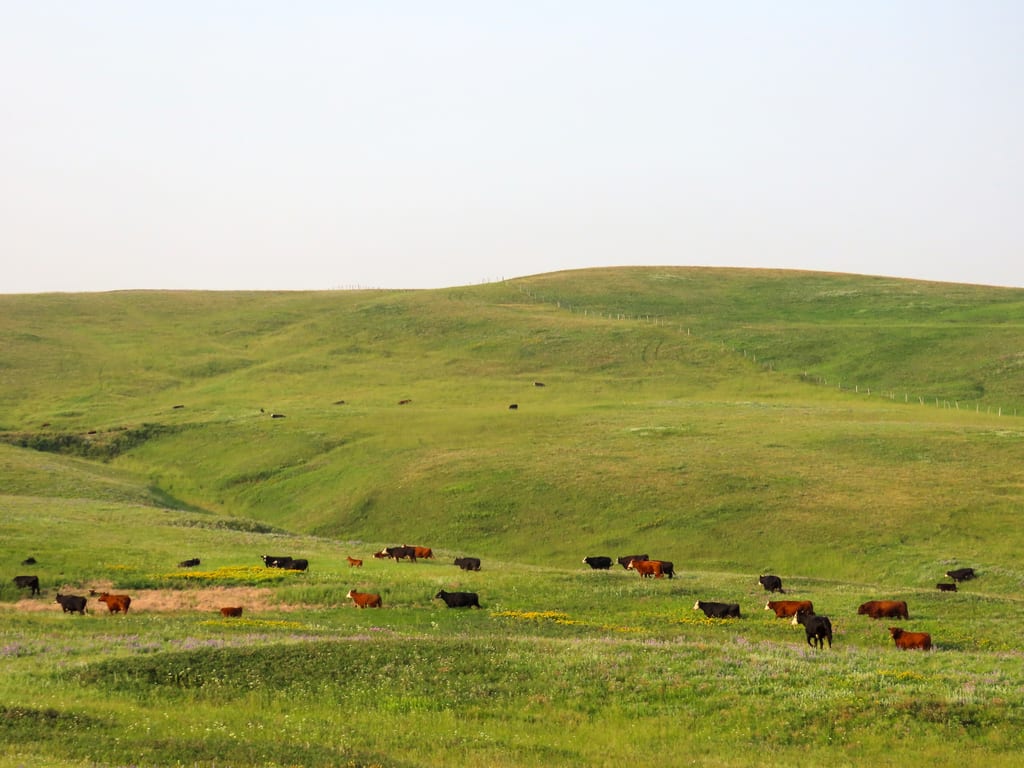
Lethbridge, AB (November 24, 2026) – A southern Alberta family has donated 65 hectares (160 acres) of native fescue grassland on Alberta’s Milk River Ridge to the Nature Conservancy of Canada (NCC), ensuring it will stay productive for future generations. The land will continue to be available for local ranchers to graze, while providing important benefits for people and nature.
A family’s connection to the land
Known within the family simply as the “quarter pasture,” the property has been part of the Coppieters family's story for generations. Peter Coppieters Sr. and his wife, Mary, established roots in the area in 1925, purchasing land and beginning the family farm. Their son, Peter, later purchased the quarter pasture with his wife, Donna, continuing the family's stewardship of the land.
The quarter pasture was never cultivated, remaining as native prairie used for grazing cattle and as a place where the Coppieters made lasting memories. Donna describes the property as rich in wildlife, including elk, deer, pronghorn and many birds.
For Donna, conserving the property means knowing that a piece of the Coppieters family's history, and a place they have cared for across generations, will remain protected as native prairie forever.
Part of a larger prairie story on the Milk River Ridge
The Coppieters family’s gift contributes to a growing network of conserved lands across the Milk River Ridge, which stretches along Alberta’s southern border between the communities of Magrath and Milk River.
The ridge is an important stronghold for foothills rough fescue grassland, one of Alberta’s most threatened ecosystem types. Private land covers about 80 per cent of the ecosystem’s remaining area, making landowner-led conservation especially important. Coppieters Acres builds on conservation projects NCC supporters have made possible in this region, including McIntyre Ranch and Sandstone Ranch.
Water collected along the Milk River Ridge supports communities and farms across central North America. Water flowing north drains into the Oldman watershed, winding its way through Prairie communities before ultimately reaching Hudson Bay, while water flowing south enters the Milk River watershed, on its way to the Gulf of Mexico via the Missouri and Mississippi rivers.
Benefits reaching beyond
Intact native grasslands provide many important benefits for people.
They help filter and protect water, supporting communities and agriculture downstream. They also support pollinators that bring food to our tables. These insects contribute an estimated $3 billion in ecosystem service value to prairie crop production each year.
Native fescue grasslands in Alberta are critical carbon sinks, too, storing as much as 200 tonnes of carbon per hectare in the first metre of soil. Hidden beneath the grasslands at Coppieters Acres is estimated to be 11,400 tonnes of carbon – an amount equivalent to the annual emissions of almost 14,000 cars.
Keeping the land working
Conserving Coppieters Acres makes for better outcomes for ecosystems and ranching alike. Well-managed grazing is an important part of healthy grassland ecosystems, helping maintain the open prairie landscape and diverse mix of native plants, while also supporting the local economy.
NCC’s stewardship team will assess the property and develop a management approach for its continued use as grazing land, including assessing range health and addressing issues such as invasive species.
Ongoing monitoring and collaboration with ranchers will help keep it healthy for years to come.
Quotes
“Peter and I have always really appreciated and looked up to people who chose to conserve their land. When we talked about it, we thought this was the best thing we could do with the quarter pasture. We’re happy that it will stay the way it’s always been.”
– Donna Coppieters, land donor
“Milk River Ridge is one of the most intact grassland landscapes left in Alberta, and every hectare that stays whole matters. The Coppieters family's gift is exactly the kind of local stewardship that keeps these grasslands healthy, working and connected for the ranchers, wildlife and communities who depend on them.”
– Tom Lynch-Staunton, Regional Vice President, Nature Conservancy of Canada
How you can help
Conserving grasslands takes more than protecting land. It requires ongoing care to keep these landscapes healthy for generations. To help care for the prairie that sustains us, visit natureconservancy.ca/donate.
Acknowledgements
This project was made possible through the generosity of the Coppieters family, with support from Cenovus through the Conserving Critical Wetlands Program.
Facts
Coppieters Acres is located 17 kilometres southeast of Magrath, in Warner County.
The 65-hectare property consists of about 87 per cent native fescue grassland. The remainder is made up of wetlands and riparian areas, which help store and filter water, supporting healthy watersheds downstream.
Bobolink, a species of special concern in Canada, were found on the property during field surveys in 2026. Their Canadian population has declined by about 80 per cent since 1970.
Hoary bats and silver-haired bats have been confirmed on the property, both of which are considered sensitive in Alberta and have been recommended by COSEWIC for listing as Endangered.
Five other species of management concern have also been found in the project area, including Brewer’s sparrow, eastern kingbird, plains garter snake, sharp-tailed grouse, and upland sandpiper, all listed as sensitive in Alberta.
Images
About
Since 1962, the Nature Conservancy of Canada has brought people together to protect the lands and waters that sustain us all. As an environmental charity working hand in hand with communities, Indigenous Nations, governments and businesses, we deliver nature-based solutions at a scale no one else can. Our conservation work safeguards clean air and water, stores carbon and reduces the risks of floods and wildfires — protecting our health, strengthening local economies and building more resilient communities. Together, we unlock nature’s power, so life can thrive. Learn more at natureconservancy.ca.
Contact
Nature Conservancy of Canada
E: media@natureconservancy.ca
Add a dose of nature to your inbox
Get the latest on conservation wins, stories from the field, simple ways to help wildlife thrive, upcoming events and simple ways you can make a difference.
You might also like
AB Alberta
Kropinak family’s century of stewardship helps secure a critical Rocky Mountain wildlife corridor
September 15, 2026
AB Alberta
On 10-year anniversary of Beaver Hills Biosphere, NCC announces new conservation project for local resilience
March 16, 2026
AB Alberta
More of North Saskatchewan River protected thanks to well-kept donation
December 11, 2025
AB Alberta
Important grasslands near Lethbridge donated for permanent conservation
October 21, 2025
AB Alberta
Join the effort to conserve vital Prairie grasslands in the heart of Alberta’s cowboy country
July 3, 2025
AB Alberta
NCC expanding conservation network in Alberta’s southern foothills through new Waldron partnership
June 19, 2024
AB Alberta
Nature Conservancy of Canada celebrates successful campaign to conserve McIntyre Ranch
April 23, 2024