Stories
AB Alberta
BC British Columbia
MB Manitoba
NB New Brunswick
NL Newfoundland and Labrador
NS Nova Scotia
ON Ontario
PE Prince Edward Island
QC Quebec
SK Saskatchewan
Pollinators and the future of food
Wild pollinators support millions of people's nutrition in Canada. Learn how protecting them is key in securing our food future.
June 14, 2025
By Gabriela Duarte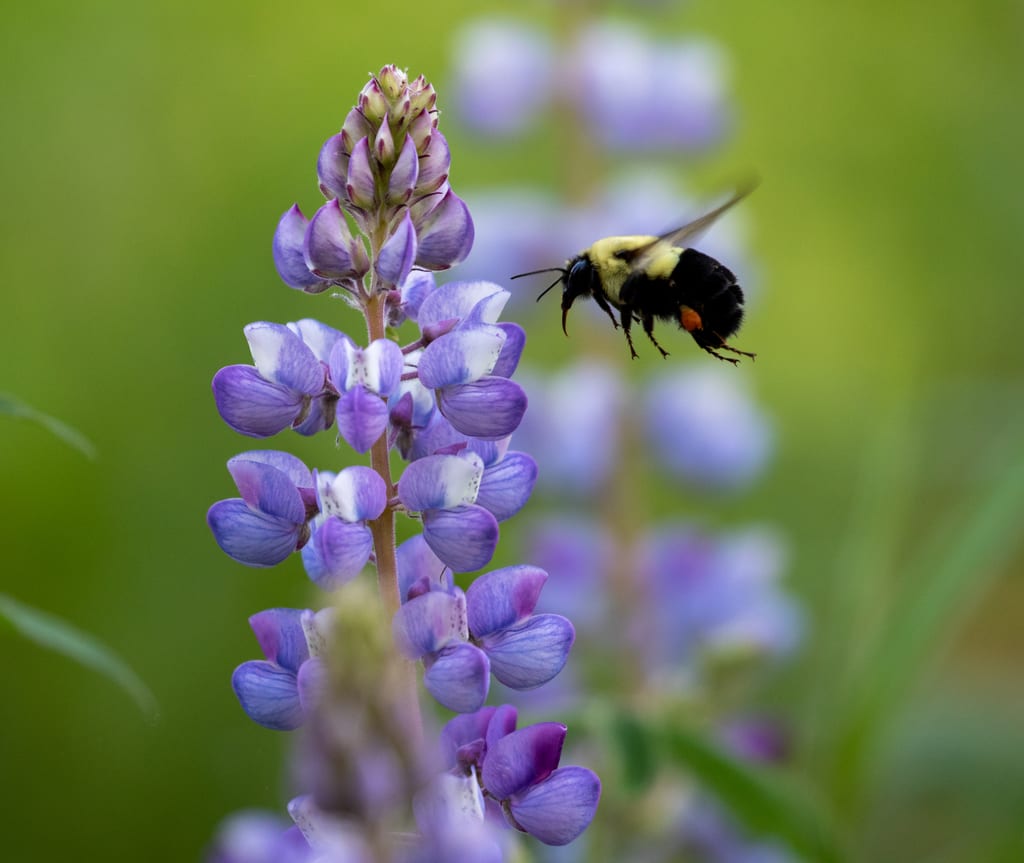
Starting my day with a variety of fresh fruits is my version of a fresh cup of coffee. One of my fondest memories is from my time in Vancouver several years ago, visiting a nearby park filled with highbush blueberries. A friend and I would spend our Sunday mornings eating berries fresh off the bush and chatting away.
One morning, my friend was bothered by the number of bees around us. There were so many! It sparked a conversation about the crucial role these bees play. I explained to her that our lovely blueberry mornings were made possible by those very bees; they pollinate the plants, allowing them to produce the delicious berries we were enjoying. The same goes for the coffee we drink and savour daily.
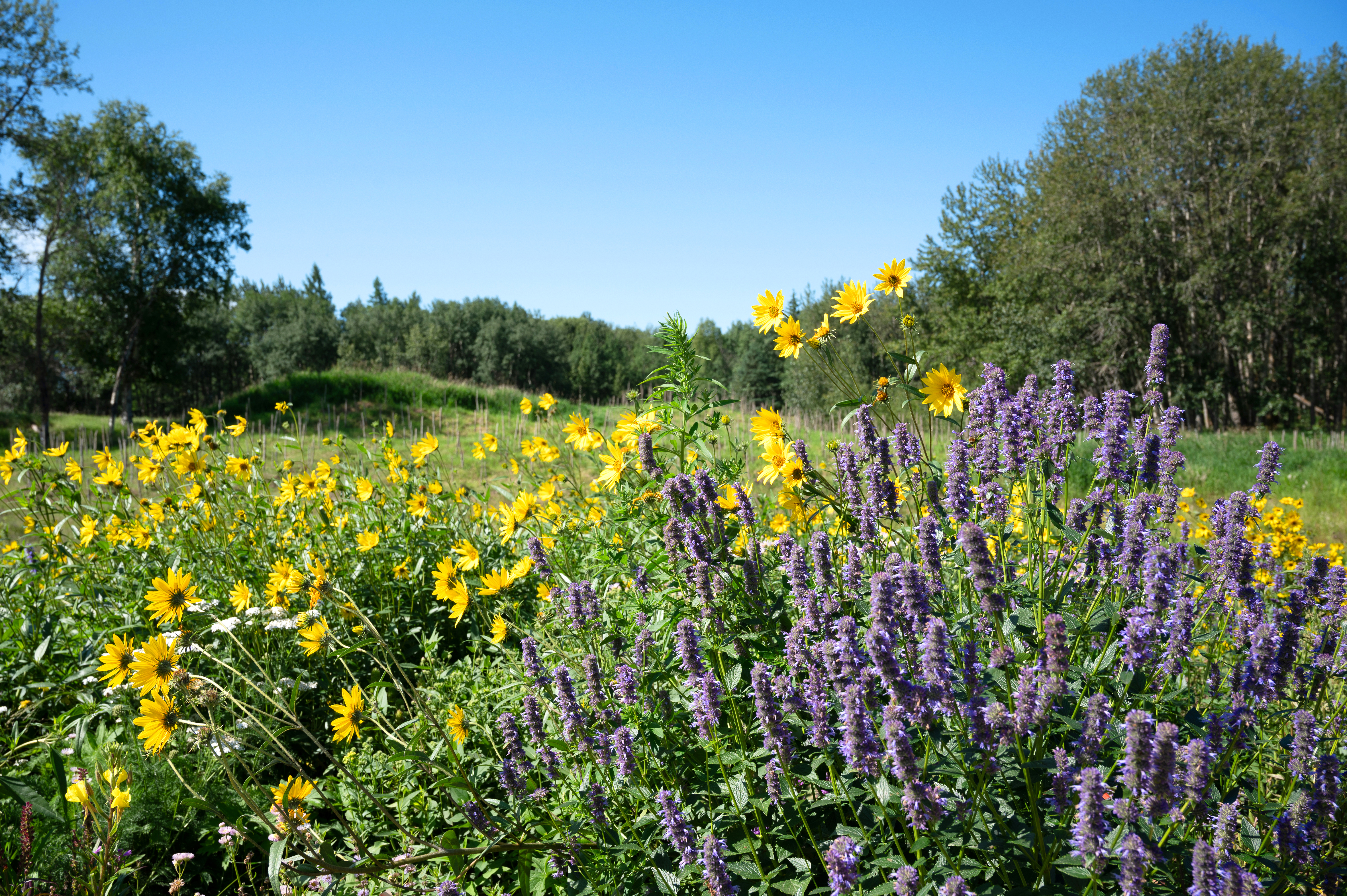
In 2016, a global scientific report was released estimating that more than three-quarters of the world’s main food crops depend, to some extent, on pollinator species. The more pollinators we have, both in number and diversity, the better it is for crop yields. Bees, butterflies and wasps all contribute to a stable and abundant food supply because they differ in their foraging behaviours and responses to changing conditions.
Despite their importance, wild pollinator populations are declining worldwide due to habitat loss, pesticide use, climate change and pathogens. This decline threatens food production and farmers’ livelihoods. Different crops have varying dependencies on pollinators, meaning that the impact of their decline can differ from region to region.
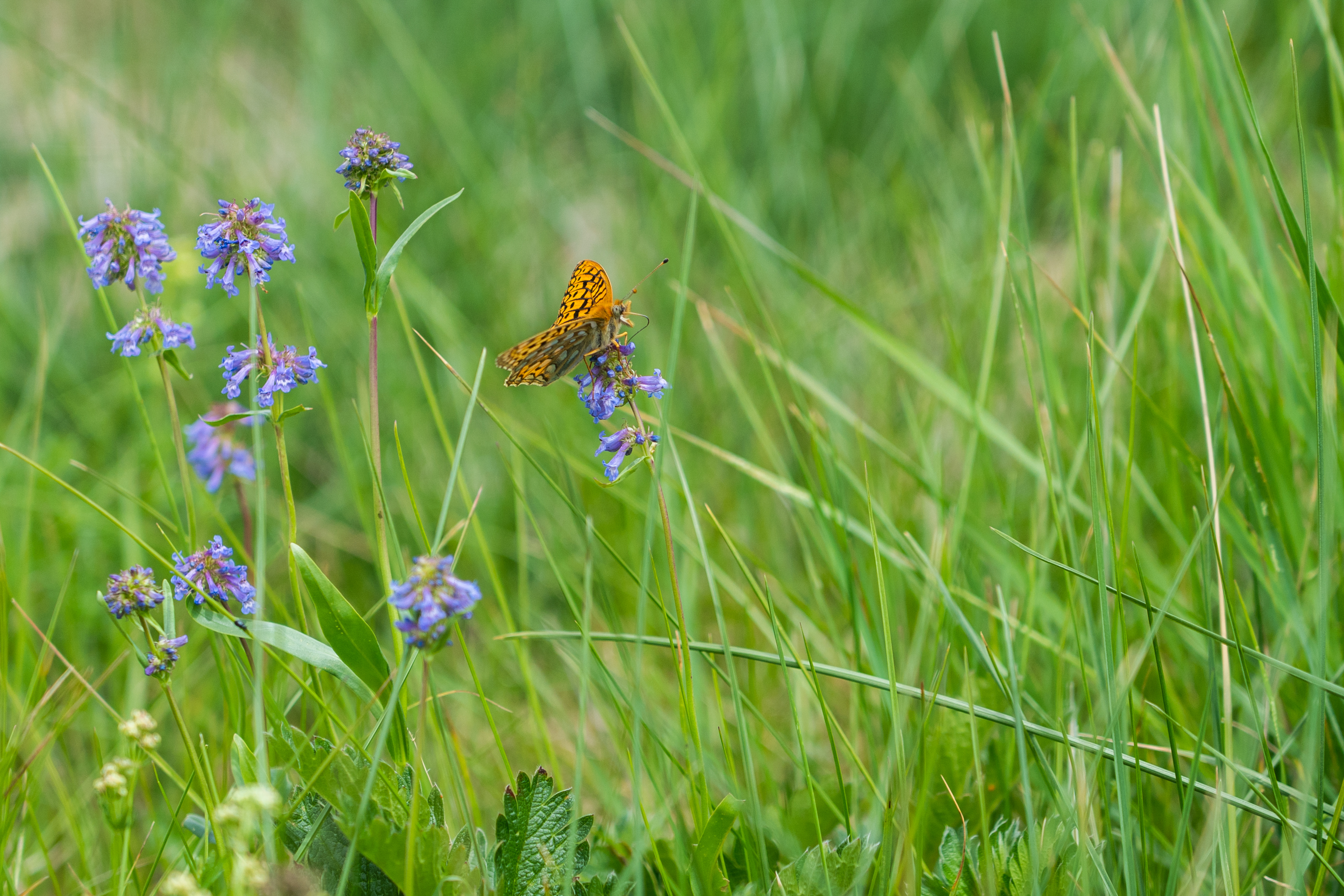
With this in mind, I set out with my colleagues, Richard Schuster (Nature Conservancy of Canada) and Matthew Mitchell (University of British Columbia), to understand the contribution of wild pollinators in Canada. Our research, published in Environmental Research Letters in March 2024, revealed that wild pollinators help sustain the nutritional needs of the equivalent of 24.4 million people annually and generate nearly CAD$2.8 billion in income for farmers. However, we also found significant benefit gaps, indicating substantial opportunities to improve pollinator habitats and management practices, particularly in Ontario, Manitoba and Saskatchewan.
Our study suggests that Canada could benefit from promoting the protection of wild pollinators. Financial incentives and environmental programs encouraging farmer cooperation could support this transition. Protecting and restoring natural habitats often enhances crop production in the surrounding area. Raising awareness among decision-makers and those most affected about the importance of pollinators is also crucial for their long-term sustainability. Additionally, ecological intensification practices — such as intercropping, crop rotations, and on-farm diversification — can harness natural ecological process to conserve biodiversity and improve yields. This benefits both farmers and the environment.
Ensuring food security for a growing global population while protecting biodiversity is a significant challenge. By integrating pollinator conservation practices with climate-smart agriculture and sustainable land management, we can enhance biodiversity, improve crop production and resilience, and increase carbon storage in agricultural ecosystems. This approach not only supports human well-being but also ensures the sustainability of our food systems for future generations. So, the next time you’re enjoying your morning coffee or fresh fruit, remember the tiny pollinators that make these moments possible.
Add a dose of nature to your inbox
Get the latest on conservation wins, stories from the field, simple ways to help wildlife thrive, upcoming events and simple ways you can make a difference.
You might also like
AB Alberta
Amping up grassland restoration with fungi
March 31, 2026
Canada
Hope, insights, and awareness for invasive species management
February 26, 2026
SK Saskatchewan
The sound of the prairie: Why grazing management matters
November 26, 2025
ON Ontario
Advancing conservation: in the field with butterflies
October 6, 2025
Canada
Water is life — and it begins with land
October 6, 2025
Canada
Canada’s forests: the roots of a resilient nation
September 24, 2025

Canada
NCC shares expertise at the Canadian Ecological Connectivity Conference
July 30, 2025

Canada
Harnessing technology for conservation: A new era for Canada’s ecosystems
May 15, 2025
SK Saskatchewan
Bringing bison back to the landscape
May 1, 2025
Canada
By seed and saw
April 5, 2025