Stories
AB Alberta
BC British Columbia
MB Manitoba
NB New Brunswick
NL Newfoundland and Labrador
NS Nova Scotia
ON Ontario
PE Prince Edward Island
QC Quebec
SK Saskatchewan
Guardian of tradition
River Guardian Justin Hodge of Qalipu First Nation protects Charlie's Place by weaving together Traditional Knowledge and science.
September 28, 2025
By Bess Callard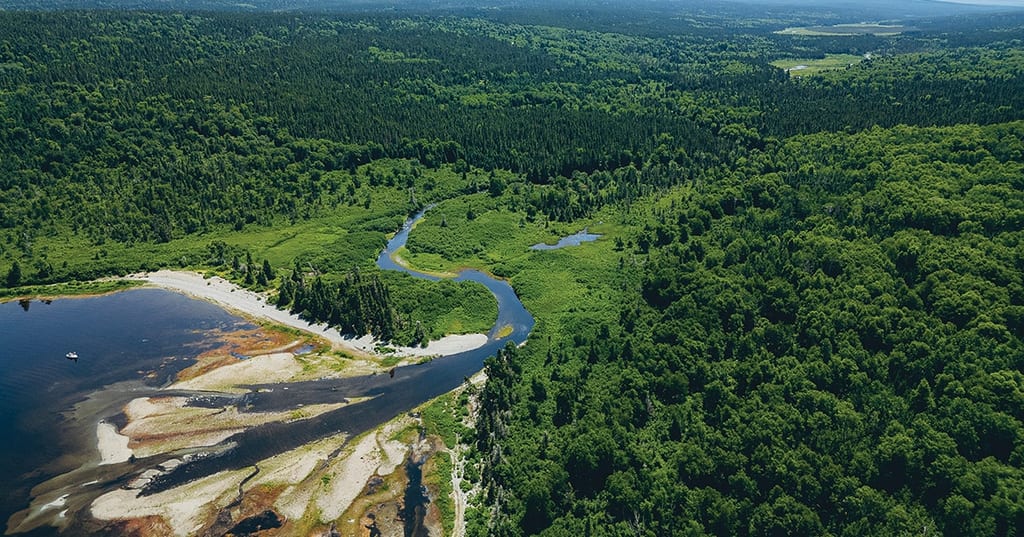
Fed by the clear, cold tributaries that carve their way through the old-growth forests of central Ktaqmkuk (Newfoundland), the Gander River flows northeast toward the Atlantic Ocean.
The river has been an essential source of fresh water and food for Indigenous Peoples for thousands of years. And for Charlie Francis, a Mi’kmaq hunter and trapper, it was the river that brought him to a special piece of land more than 200 years ago.
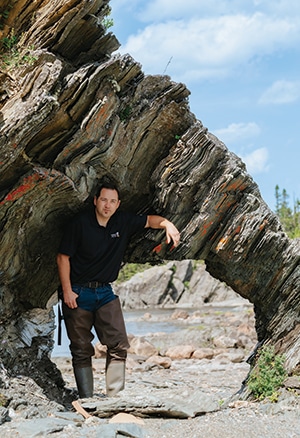
Today, Justin Hodge, a River Guardian with Qalipu First Nation (QFN), paddles his canoe along the shore of the Northwest Gander River. As part of his work as a River Guardian, he monitors the rivers, ensuring sustainable management of resources for the community and for future generations. It’s this work, which he began five years ago, that he credits with re-establishing his connection to the land. “I’d find myself rushing to the cabin on the weekends, trying to soak everything up in 24 hours,” says Hodge. “So when the opportunity to become a River Guardian came up, I just jumped. I said, I’m going to do something to get this connection back.”
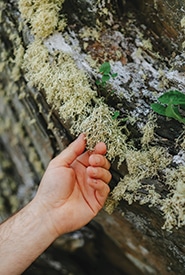
On the southern shore of Gander Lake, nestled between the Northwest and Southwest Gander rivers, is an 11,000-hectare area known as Charlie’s Place, after Charlie Francis. Francis hunted, trapped and fished on this land, making it his home in the 1800s. It is an area of deep ecological and cultural significance to the Mi’kmaq people of this area. Recent research conducted by members of QFN, environmental organizations and universities, and supported by Hodge and the River Guardians, indicates the area is a lichen diversity hotspot. Observations by Birds Canada suggest it is also a bird diversity hotspot, hosting several at-risk and rare bird species. Additionally, Charlie’s Place forms part of the watershed for four communities on the shores of Gander Lake, and several more downstream along the Gander River. “This is verifying stuff we’ve always known,” says Hodge. “My father and grandfather would teach me all the ins and outs about the different animals and biodiversity here.”
But in 2021, Hodge discovered that a five-year plan had been proposed by a local paper company to harvest timber from Charlie’s Place, jeopardizing the health of this fragile ecosystem. With only two days until the deadline for public consultation closed, he jumped into action. Hodge organized a grassroots campaign with community members to protect the area. He toured the land with government officials, imploring them to take a second look at the harvesting plan and to reconsider the ecological and cultural value of the site. “We’re doing this for everybody. This is for humanity, not [just] for Indigenous people, for everyone,” says Hodge. “My grandfather would tell me about the pine marten and all these animals that have since disappeared.”
Hodge’s campaign to protect the area for future generations led to an agreement between QFN and the Nature Conservancy of Canada to work together to advance the protection of Charlie’s Place. The partnership was formalized under a Memorandum of Understanding signed in April 2024. “We envision having an Indigenous Protected and Conserved Area, which would hold our values intact and those of the residents here,” says Hodge about his future hopes for the area. “In the meantime, we’re working on a Key Biodiversity Area designation, which would be a precursor to more formal protection.”
Hodge credits several individuals and organizations with supporting QFN in achieving a pause in resource exploration in Charlie’s Place. “We’re weaving together Traditional Knowledge and science — this is Two-Eyed Seeing. We’re using it to tell the stories and share the experiences of our families and applying science,” says Hodge. “This is an overwhelming success. And I think this should work — and is working — right across Canada.”
Add a dose of nature to your inbox
Get the latest on conservation wins, stories from the field, simple ways to help wildlife thrive, upcoming events and simple ways you can make a difference.
You might also like
AB Alberta
Amping up grassland restoration with fungi
March 31, 2026
Canada
Hope, insights, and awareness for invasive species management
February 26, 2026
SK Saskatchewan
The sound of the prairie: Why grazing management matters
November 26, 2025
ON Ontario
Advancing conservation: in the field with butterflies
October 6, 2025
Canada
Water is life — and it begins with land
October 6, 2025
Canada
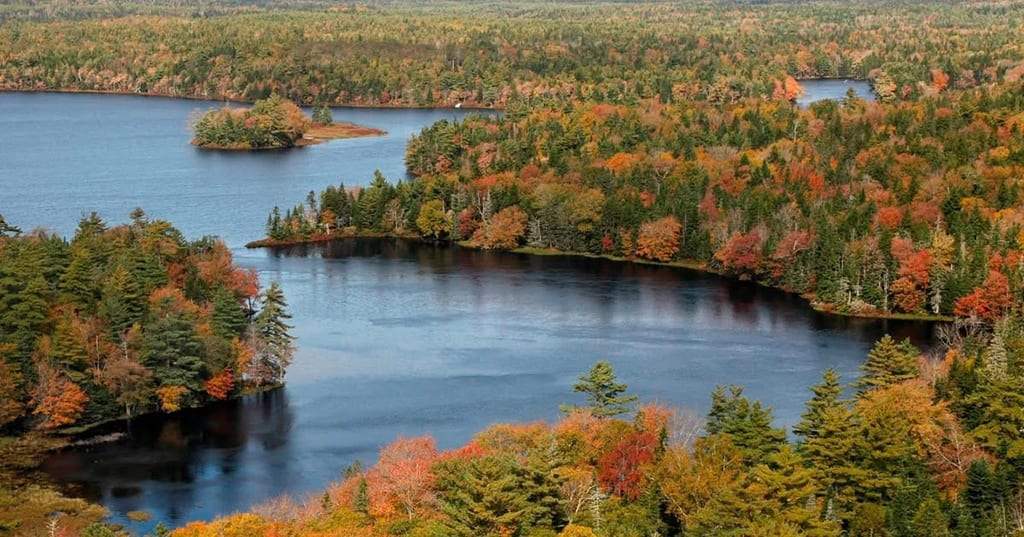
Canada’s forests: the roots of a resilient nation
September 24, 2025
Canada
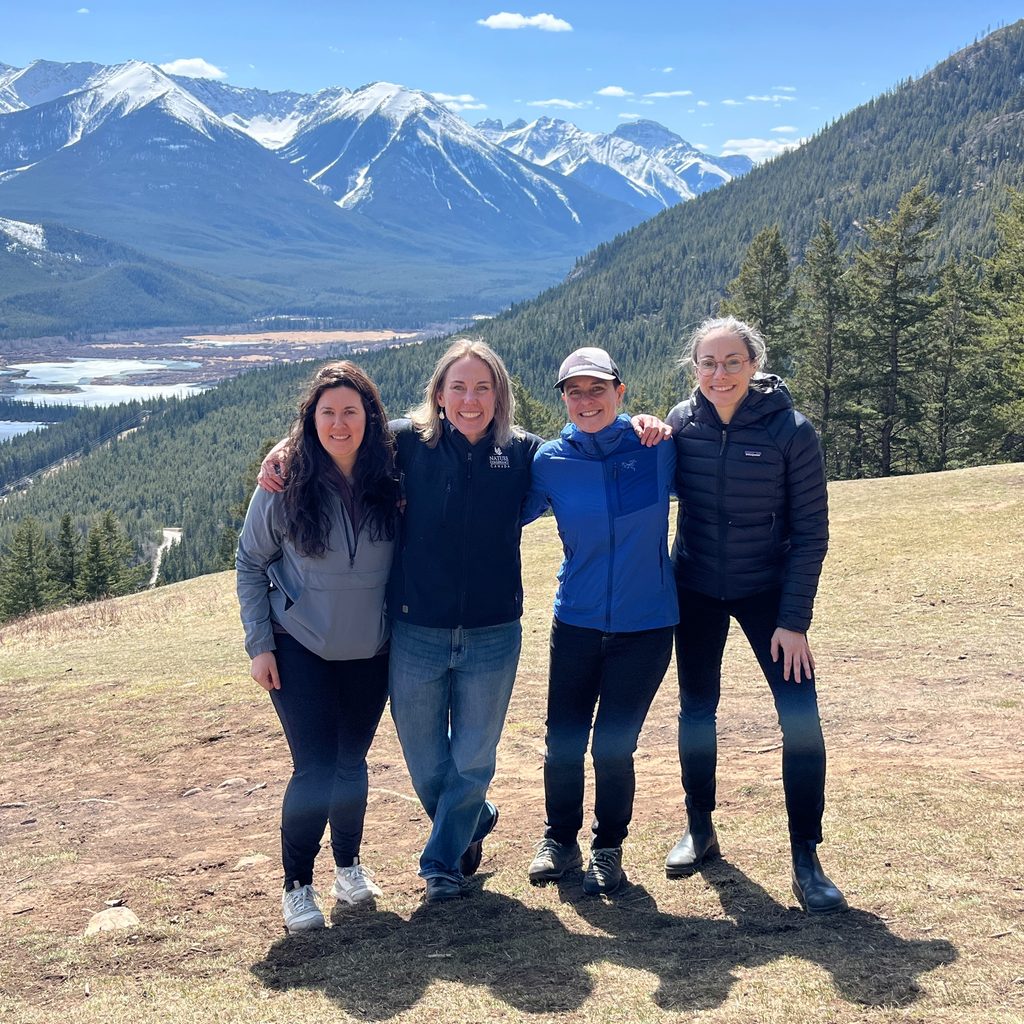
NCC shares expertise at the Canadian Ecological Connectivity Conference
July 30, 2025
Canada
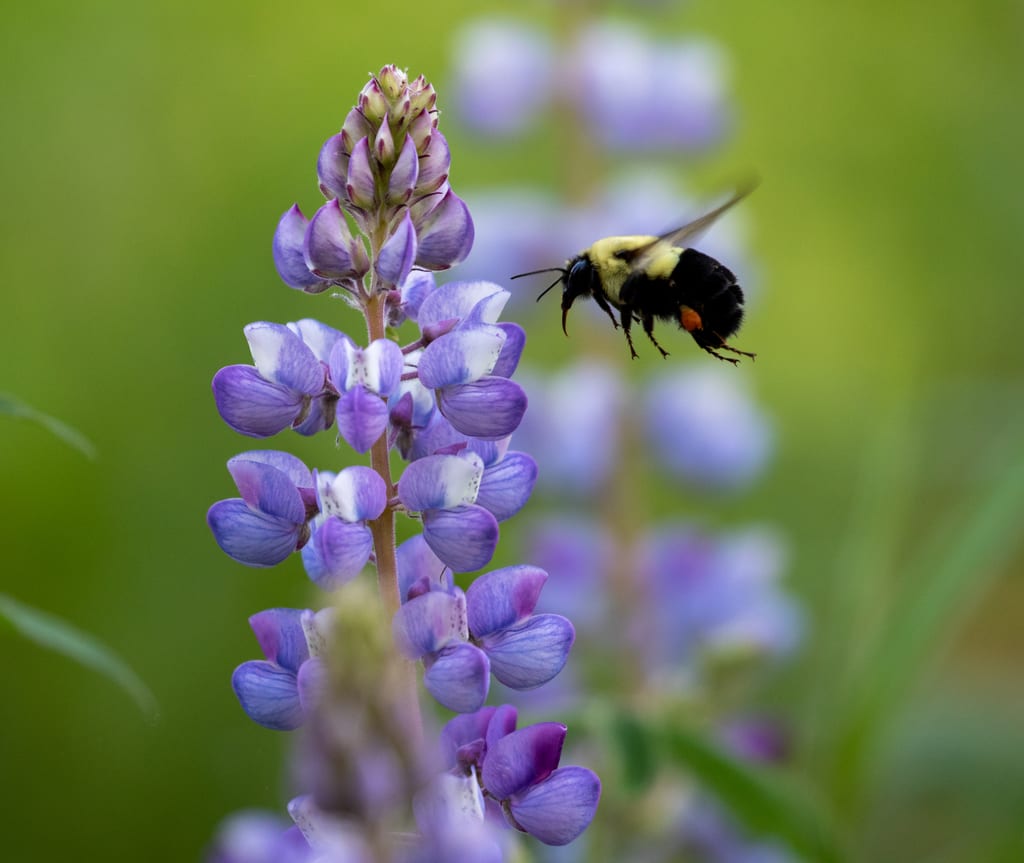
Pollinators and the future of food
June 14, 2025
Canada
Harnessing technology for conservation: A new era for Canada’s ecosystems
May 15, 2025
SK Saskatchewan
Bringing bison back to the landscape
May 1, 2025